14 Company - 'The Det'
14 Intelligence Company - sometimes referred to as 14 INT, 14 Company, 14th Intelligence Detachment or 'The Det' - was a British Army special forces unit, established during the Troubles, which carried out surveillance operations in Northern Ireland.
Before 14 Company was created, undercover military surveillance in Northern Ireland was carried out by a unit known as the MRF (referred to in different sources as the Military Reaction Force, Military Reconnaissance Force or Mobile Reconnaissance Force). The MRF had some success, but it's operations were eventually compromised. 2 IRA double-agents that the MRF had turned were discovered by the Provos and interrogated, spilling the details of a covert MRF operation based out of the Four Squares laundry in Belfast. Using information gleaned from the interrogations, the IRA ambushed a MRF laundry van, killing one undercover soldier.
With the MRF compromised, it was decided that a dedicated force of highly-trained plain-clothes surveillance operatives should be established for operations in Northern Ireland. 14 Intelligence Company was to be selected and trained by a specially setup training wing of 22 SAS. Additionally, SAS officers would form the unit's command. In 1973, 3 Detachments, or 'Dets' were setup, each within its own sector of Northern Ireland
During the Troubles, men from the SAS and SBS would serve tours with 14 Company. It was good experience for the special forces soldiers, who would not only enhance their assigned Det with their particular skills, but they also would, on completing their tour, return to their units with invaluable operational experience.
Selection
Selection to 14 Company was open to all members of the armed services and to all genders. For the first time, women could become members of a UK Special Forces unit. Candidates were required to pass a rigorous selection process, designed to weed out anyone without the necessary qualities to deal with the unique challenges of life as a an undercover operative. Excellent observational abilities, stamina and the ability to think under stress are vital for undercover surveillance work. Since many operations require the operative to work alone, a sense of self-confidence and self-reliance is also a prerequisite.
Training
The training of 14 Company covered all the skills required of a surveillance operators.
- Advanced driving courses were taught, including sustained high speed driving, using a vehicle as a weapon, controlled crashes, skid recovery and anti-ambush skills.
- Photography is a vital skill and the candidates first learnt the basics then moved onto advanced nighttime Infra-red photography. They also learnt how to conceal still and video cameras in their clothing and in cars.
- The demanding disciplines of surveillance - from hiding in ditches or attics, to following on foot, to surveillance from vehicles - were all taught. The ability to observe, follow and communicate over the radio network, all covertly, were ingrained in the operators.
- Operators also learnt how to plant electronic eavesdropping devices (bugs) and covert video cameras. They also practiced planting tracking devices on cars, in weapon caches and even on people. Breaking into houses and businesses and planting bugs and gathering intelligence without being detected was also taught, as were the arts of lock-picking and key-copying.
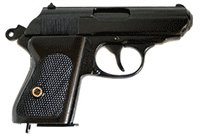
- Whilst trained to avoid direct contact, 14 Company members were nevertheless highly skilled in close quarters combat (CQB). Members become experts at using pistols (usually browning high powers or Walter PPKs), sub machine guns such as HK MP5ks, carbines (HK53) and assault rifles (G3KA4). 14 company members were taught how to employ their weapons from within vehicles as part of anti-ambush drills. It was not uncommon for det operatives to have an extra pistol - often another browning hp with extended 20 round magazine - stowed within easy reach in their vehicles. A remington 870 shotgun was also hidden inside Det cars. The remington could be used to blast out the windscreens of their vehicles, allowing the operatives inside to fire their other weapons.
- Unarmed combat was taught to Det operatives, particularly techniques to disarm and neutralise knife or gun-weilding assailants.
Special Equipment
Though not quite up to James Bond standards, the Det employed some specialised equipment. Operators wore microphones and earphones hidden in their clothing to enable them to talk on 'the net' whilst in public. Special covert holsters were worn that allowed an operator conceal their pistols in their waistbands.
14 Company drove a range of cars that from the outside looked like everyday civilian saloons, but in fact had some special features built-in.
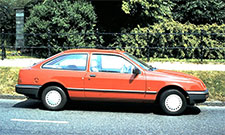
- These so-called 'Q' cars had covert radios with hidden speakers and microphones that could not be easily spotted from the outside.
- Video and still cameras were often secreted about the vehicles, allowing the operators to film surreptitiously.
- The brake lights on Q cars could be disabled by a switch so as to allow them to covertly pick up or drop off fellow operatives at night.
- Engine cut-off switches were fitted as an hijacking countermeasure.
- Operator's cars would also be fitted with systems to detect any tampering with the vehicle's electronics - a sign that a car bomb had been planted.
- Q cars were fitted with covert kevlar armour plating. Gaps were left in the armour to allow operatives to fire through the bodywork - a requirement in some anti-ambush drills.
- A flashbang dispenser was sometimes secreted beneath a Q car. When triggered by a foot switch multiple stun grenades would fly out in all directions before detonating. The flashbangs were for emergencies such as escaping a terrorist roadblock or dispersing a hostile crowd.
- 14th Intelligence Detachment
- NITAT
- Intelligence and Security Group (NI)
- Int & Sy Group
- 14 Intelligence and Security Company
- 14 Intelligence Company
- 14 Company
- 14 Int
- The Det
- Special Reconnaissance Unit
A flight of Army Air Corps (AAC) Gazelles, nicknamed the 'Bat flight' were frequently used on 14 Company operations. The Gazelles carried sophisticated surveillance gear well suited for supporting 14 Company operations. These video and Forward Looking Infrared (FLIR) cameras were slaved to a sight usually used to fire wire-guided missiles. At least one Det operator would ride in the helicopter and follow suspects through the sighting system, usually high up, out of sight or sound of anyone below. Det helicopter passengers would usually be armed with Hk53 carbines or G3 rifles, ready to engage ground targets from the air, if required, although there is no public record of this ever happening.
14 Company Operations
From their inception until the Troubles played out, 14 Company carried out numerous operations, mostly following and observing suspected terrorists. These painstaking intelligence gathering efforts often led to the arrest of terrorists by the RUC as well as discoveries of weapons caches.
In addition to simple surveillance, they also liaised with SAS teams from whichever squadron was active in Northern Ireland at the time, acting as addition eyes and ears and often providing covert transportation for SAS operations. In the early 80s, a dedicated SAS troop was eventually attached to 14 Company, Together the 2 units formed the Intelligence and Security Group (NI) otherwise knowns Int & Sy Group or just 'the Group'.
read more on 14 Company / SAS activities in Northern Ireland
On rare occasions 14 Company members would end up in firefights with terrorists, usually the result of their covers being compromised. Tragically, several 14 Company operators lost their lives in Northern Ireland.
It's believed that during the nineties the role of 14 Company was expanded to include operations outside of Northern Ireland. It is thought that, amongst other activities, the unit supported NATO efforts to arrest suspected war criminals in the former Republic of Yugoslavia. In such a role, it is likely that 14 Company identified and tracked targets for SAS arrest operations such as Operation Tango.
The unit has now been absorbed into the Special Reconnaissance Regiment (SRR), with a remit to fight the global war against terror.
| Related Book : She Who Dared: Covert Operations in Northern Ireland with the SAS by Jackie George The extraordinary story of a woman's tour of duty in 14th Intelligence Company, or 'the Det'. The book covers her selection, training and the covert surveillance missions she undertook in Northern Ireland. |