The Gurkhas
Respected by Britain's allies and feared by its enemies, the Gurkhas reputation precedes them wherever they deploy. Whilst technically a standard infantry unit, the Gurkha Rifles' legendary toughness, skill and tenacity earns them, in this web site's opinion, the status of an elite fighting force.
The Gurkhas are a product of Britain's colonial past. These Nepalese tribesman had distinguished themselves when fighting against British-backed forces in the early 19th century. The British were so impressed with the Gurkhas' fighting prowess and spirit that they began hiring them as mercenaries. Soon, dedicated Gurkha regiments were formed within the British Indian Army.
The Brigade Of Ghurkas
The current order of battle (ORBAT) of Gurkhas within the modern British Army is as follows:
- HQ, Brigade of Gurkhas, based at Trenchard Lines, Upavon
- 2 Infantry Battalions consisting of:
- 1st Battalion The Royal Gurkha Rifles (1RGR)
- 2nd Battalion The Royal Gurkha Rifles (2RGR)
- Queen's Gurkha Signals:
- 250 Gurkha Signal Squadron
- 246 Gurkha Signal Squadron
- 248 Gurkha Signal Squadron
- Queen's Own Gurkha Logistics Regiment
- Queen's Gurkha Engineers:
- 69th Gurkha Field Squadron
- 70th Gurkha Field Squadron
- Gurkha Company, 3rd Battalion, Infantry Training Centre, Catterick
- The Gurkha Company (Sitang), Royal Military Academy Sandhurst
- The Gurkha Company (Mandalay), Infantry Battle School, Brecon
- Brigade of Gurkhas Training Team
- Gurkha Language Wing, Catterick
- The Band of the Brigade of Gurkhas
Gurkha combat history
The Gurkhas fought for the British during World War 2 in the Pacific, North African and European theatres.
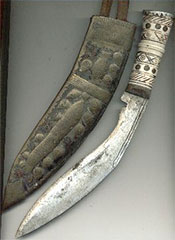
Following Indian independence in 1948, several Gurkha regiments joined the Indian Army whilst others were incorporated into the British Army and were stationed in Malaya. Gurkha formations fought rebels during the Malayan emergency. Later, they were deployed to Brunei to help quash a revolt. A commando unit, the Gurkha Independent Parachute Company, was temporarily raised for deployment to Borneo during the Indonesia-Malaysia confrontation of the early sixties. The Gurkha commandos worked closely with the Special Air Service during the conflict.
The Gurkhas were deployed to the Falklands during the 1982 conflict. Despite having to deal with a completely foreign climate, landscape and the Antarctic weather, the Gurkhas were well up for a fight; only to be disappointed when the Argentine units they were to face surrendered when they learned it was the Gurkhas coming for them.
The Gurkhas also deployed alongside NATO forces during operations in Kosovo in 1999, working alongside the Parachute Regiment, where they helped secure the main routes into the country.
A contingent of Gurkhas, along with a small team of Special Boat Service (SBS) operators, flew into East Timor in September 1999 as part of a UN peace keeping force. The Gurkhas engaged in brief skirmishes with Indonesian forces around the main airport.
Gurkhas have served several tours in Afghanistan.
- In 2003 and 2005 elements of the brigade were deployed to Kabul.
- In 2007 the 1st Battalion 1RGR deployed as part of 52 Infantry Brigade for Herrick VII and later in 4 Mechanized Brigade (April-October 2010). Elements of 1RGR contributed to 4 Mechanized Brigade's Brigade Reconnaissance Force.
- The 2nd Battalion 2RGR deployed as part of 3 Commando Brigade for Herrick IX (October 2008-April 2009) and Herrick XIV (April-October 2011).
- The Queen's own Gurkha Logistics Regiment deployed as part of 11 Light Brigade for Herrick XI (October 2009-April 2010).